
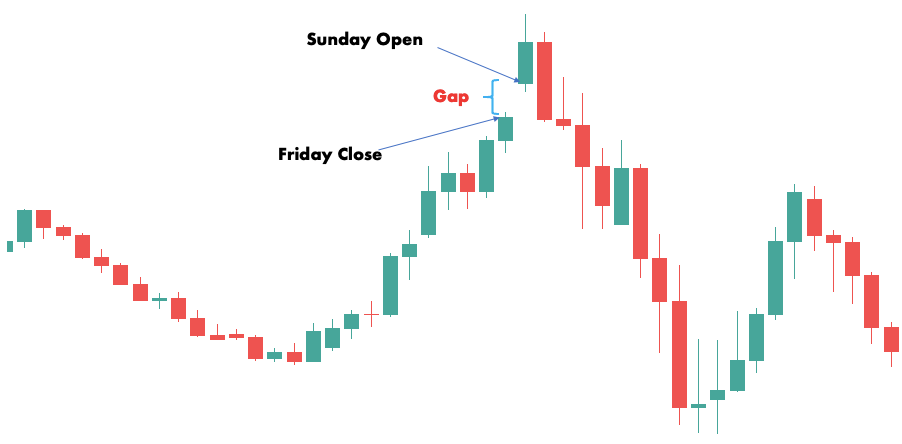
Forex trading operates 24 hours a day during the workweek, but it comes to a halt over the weekend. This break in trading often leads to what traders call “weekend gaps” when the market reopens.
But what exactly are weekend gaps, and why are they significant? Let’s explore.
Understanding Weekend Gaps
A weekend gap occurs when there is a difference between the closing price of a currency pair on Friday and its opening price on Sunday evening (or Monday morning, depending on your time zone).
These gaps can be upward (gap up) or downward (gap down), reflecting changes in market sentiment, economic events, or geopolitical developments during the weekend.
What Causes Weekend Gaps?
1. News and Events
Significant news such as economic data releases, political changes, or central bank announcements can influence market sentiment over the weekend.
For example, unexpected election results or a sudden change in monetary policy can lead to dramatic price shifts.
2. Geopolitical Tensions
Events like conflicts, natural disasters, or trade negotiations can occur over the weekend, causing uncertainty and prompting traders to adjust their positions as soon as the market opens.
3. Market Sentiment
When traders anticipate changes in the market due to upcoming events or trends, they may take positions that lead to gaps when trading resumes.
What Do Weekend Gaps Tell Us?
Weekend gaps can provide valuable insights into market behavior.
1. Market Reaction to News
A significant gap often indicates the market’s immediate reaction to news or events. For example, a gap up in a currency pair might suggest optimism, while a gap down could signal concerns or bearish sentiment.
2. Liquidity and Volatility
Gaps typically occur when there is low liquidity. The absence of active trading during weekends means fewer participants to smooth out price movements, leading to sharp jumps when the market reopens.
3. Potential Trading Opportunities
For technical traders, gaps can present opportunities. They often analyze whether the gap will “close” (the price returns to its pre-gap level) or if it signals a continuation of a trend.
How to Trade Weekend Gaps
Trading weekend gaps requires careful analysis and risk management. Here are a few tips:
1. Understand the Context
Look into the reasons behind the gap. Was it driven by news or speculation? Understanding the cause can help you decide whether to trade the gap or stay out.
2. Use Technical Analysis
Gap traders often rely on technical indicators and chart patterns to predict whether a gap will close or if it signals a breakout.
3. Manage Your Risk
Trading gaps can be risky due to the increased volatility. Always use stop-loss orders and avoid over-leveraging your positions.
Final Thoughts
Weekend gaps are a natural part of forex trading, reflecting how global events influence market sentiment. By understanding their causes and implications, traders can turn these gaps into opportunities rather than pitfalls. However, like any trading strategy, trading gaps requires discipline, research, and proper risk management.
If you’re just starting in forex trading, take the time to observe weekend gaps and learn how they behave before incorporating them into your strategy. Remember, the key to success in forex trading is staying informed and adapting to market conditions.
Ready to enhance your trading skills? Visit Giant Pips for free trading courses, insights, and blogs tailored for traders of all levels.